
Meat rabbits are one of the most efficient, affordable, and beginner-friendly livestock animals a homesteader can raise. They convert feed to meat faster than any other livestock, require minimal space, produce no significant noise, and can provide a meaningful portion of a family’s annual protein needs from a very small footprint. If you have been thinking about adding livestock to your homestead but are not ready for goats or pigs, rabbits are the perfect starting point.
Why Meat Rabbits Make Sense for the Small Homestead
Consider the numbers: a single doe (female rabbit) can produce 4 to 6 litters per year, with 6 to 10 kits per litter. At a market weight of 4 to 5 pounds live weight (2 to 2.5 pounds dressed), one productive doe can yield 50 to 100 pounds of dressed rabbit meat per year. Feed conversion is approximately 3 to 4 pounds of feed per pound of meat produced — one of the best ratios in all of livestock production. By comparison, beef cattle require 6 to 8 pounds of feed per pound of gain. Rabbit meat is white, mild, lean, and high in protein. It is lower in fat and cholesterol than chicken, beef, or pork, making it one of the healthiest meats available. The manure — often called “black gold” — is a cold manure that can be applied directly to gardens without composting, unlike hot manures from cattle, pigs, or poultry.
Choosing the Right Breed
For meat production, you want a breed that grows quickly to market weight, has a broad, meaty body conformation, and reproduces reliably.
New Zealand White
The industry standard for commercial rabbit production in the United States. New Zealands reach market weight of 4 to 5 pounds by 8 to 10 weeks of age, have excellent feed conversion, large litter sizes of 8 to 12 kits, and calm temperaments. Their white coat also makes them easier to process cleanly. If you are raising rabbits for meat efficiency, New Zealands are the starting point.
Californian
The second most popular commercial meat breed. Californians are slightly smaller than New Zealands but have outstanding meat-to-bone ratios and excellent mothering instincts. They are distinguished by their white bodies with dark ears, nose, feet, and tail.
Rex
Rex rabbits have a distinctive velvety coat that commands premium prices in the fur market, making them a dual-purpose option. They are slightly slower growing than New Zealands but have good meat quality and calm dispositions.
Crossbreeding for Hybrid Vigor
Many experienced rabbit producers cross New Zealand does with Californian bucks to produce fryer kits that outperform either purebred parent in growth rate and litter size — a phenomenon called hybrid vigor. This is a practical strategy worth considering once you have your breeding stock established.
Housing Requirements
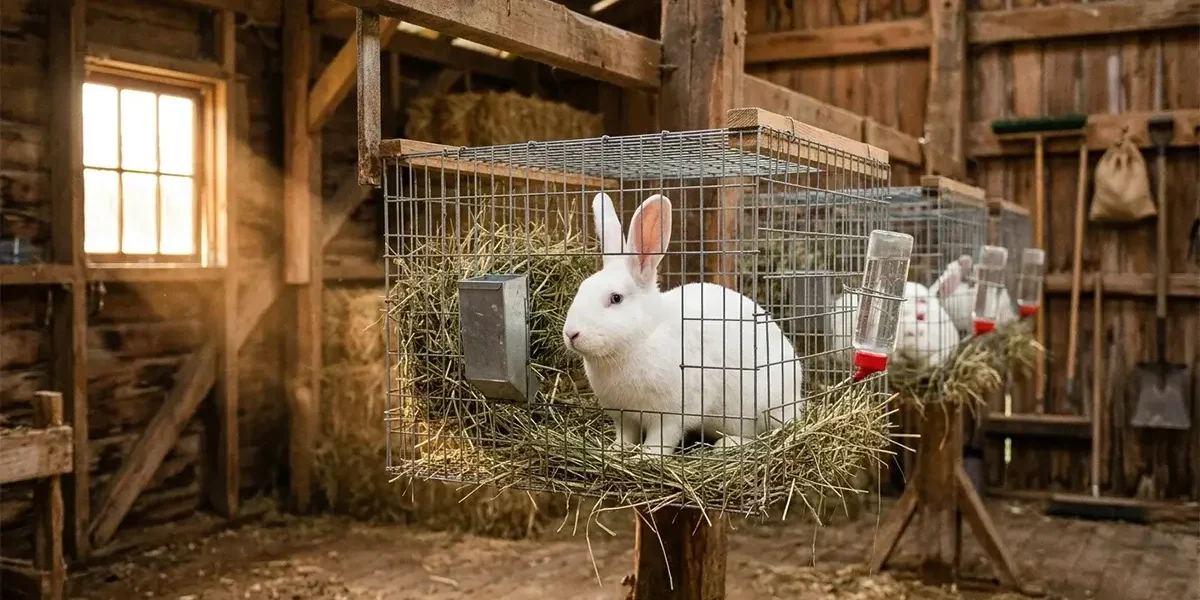
Rabbits are typically housed in wire cages suspended off the ground. This all-wire cage system keeps animals clean, allows waste to fall through to a collection tray, and minimizes disease pressure from bacteria and parasites. Key housing specifications: Does with litters need minimum 30 x 36 inches of cage space, preferably 30 x 48 inches. Bucks and grow-out fryers can be housed in 24 x 30-inch cages. Floor wire should be 14-gauge welded wire with 1 x 2-inch openings — large enough for waste to fall through but small enough to support the rabbit’s feet. Never use chicken wire for floors; the openings cause foot injuries.
Ventilation and Temperature
Rabbits are far more sensitive to heat than cold. Adult rabbits can tolerate temperatures down to 20°F but temperatures above 85°F cause heat stress, infertility in bucks, and reduced milk production in does. The ideal temperature range for rabbit production is 45°F to 75°F. In summer, ensure excellent air circulation, shade, and consider frozen water bottles in cages during heat waves.
Feeding a Meat Rabbit Operation
A quality commercial pellet forms the nutritional foundation. Look for 16 to 18% protein for grow-out fryers, and 18% protein for does in production. Feeding guidelines: adult does (not pregnant) get 4 to 6 ounces per day; does in late pregnancy and nursing get free-choice pellets — never restrict feed during peak lactation; bucks get 4 to 6 ounces per day; fryers get free-choice pellets from weaning until market weight. Fresh water is critical — a lactating doe nursing 8 kits can consume half a gallon or more of water per day. Timothy hay improves gut motility and dental health, and reduces the risk of GI stasis — offer hay free choice, particularly to bucks and non-breeding does.
Breeding and Reproduction
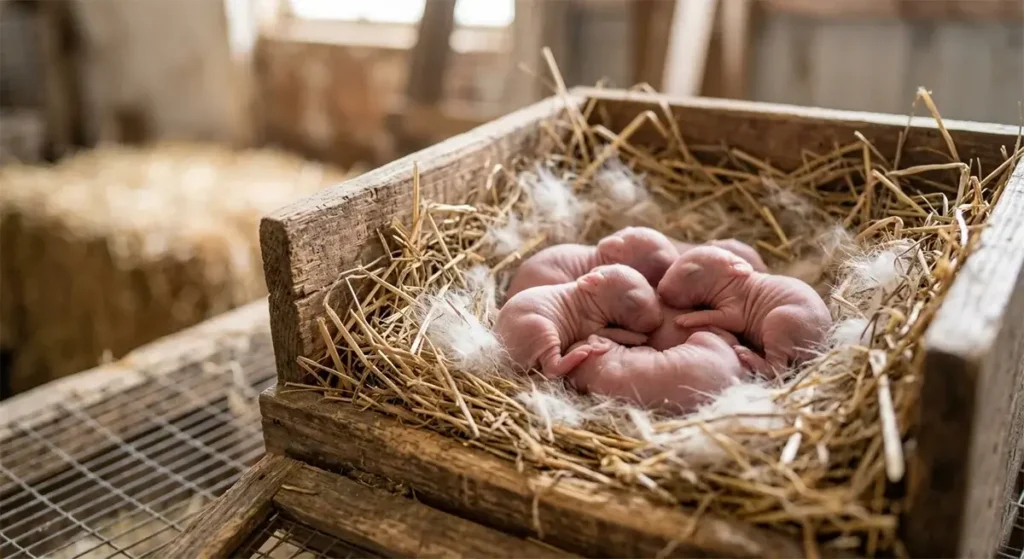
Does reach sexual maturity between 4 and 6 months for medium breeds. Always bring the doe to the buck’s cage — does are territorial and may attack a buck brought to their cage. Rabbit gestation is 31 to 33 days. Place a nest box filled with straw in the doe’s cage on day 28 of gestation. Does typically kindle (give birth) at night and are excellent mothers if left undisturbed. Kits open their eyes at 10 days, begin exploring the cage at 3 weeks, and are ready for weaning at 4 to 8 weeks. Earlier weaning at 4 weeks allows the doe to be rebred sooner for more litters per year.
Health Management
The most common health issues for backyard rabbit operations include GI stasis and enteritis (the most common cause of rabbit mortality — ensure adequate fiber from hay, avoid sudden feed changes), coccidiosis (parasitic intestinal infection most common in kits — maintain dry, clean conditions), and snuffles or pasteurellosis (bacterial respiratory infection causing nasal discharge and sneezing — affected animals should be culled from breeding stock). The House Rabbit Society’s Health Resources and your local veterinary school extension services provide current guidance on rabbit disease prevention and treatment protocols.
Processing Your Rabbits
Market-weight fryers are typically processed at 8 to 12 weeks of age at 4 to 5 pounds live weight. At this age the meat is tender, mild, and well-suited to roasting, frying, slow cooking, or smoking. Processing rabbits is significantly easier than processing chickens and can be done quickly with basic tools once you have learned the technique.
Getting Started: What You Need
To start a small breeding operation you need: 2 does and 1 buck, 3 wire cages (30×36 inches) plus 1 to 2 grow-out cages for fryers, automatic or ball waterers and feed hoppers, nest boxes (one per doe), and a 50-pound bag of quality pellet feed. Total startup cost for a three-cage backyard operation ranges from $300 to $600 depending on whether you build or buy cages. With good management, that investment returns its cost in meat within the first year.
Final Thoughts
Meat rabbits are an outstanding fit for the small homestead. They require less space, less capital, less feed, and less noise than any other meat-producing livestock, yet deliver impressive returns in protein, garden fertility, and self-sufficiency. Start with two proven does and a quality buck, invest in proper wire housing and water systems, and you will be producing your own meat within three months of your first breeding.

Leave a Reply