
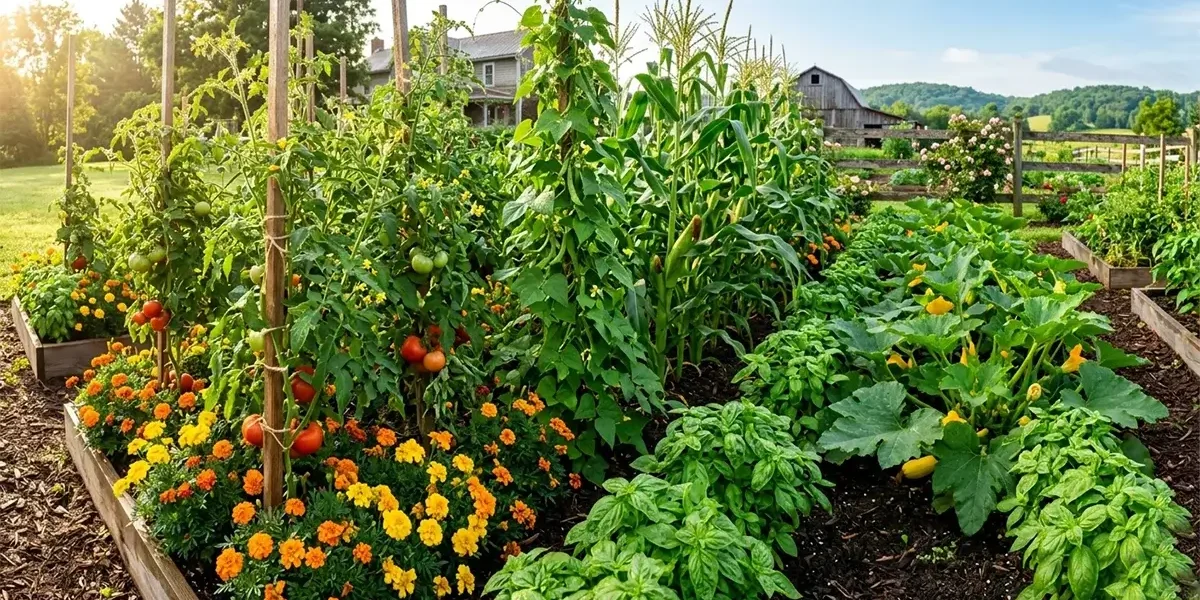
Companion planting is the practice of growing different plants in close proximity because they benefit each other — repelling pests, attracting beneficial insects, improving soil fertility, or making better use of garden space. It is one of the oldest gardening techniques in the world, refined over centuries of observation, and it remains one of the most practical and cost-free tools in the organic gardener’s toolbox. This guide gives you a complete, science-backed companion planting reference for the American homestead garden.
The Science Behind Companion Planting
While some companion planting claims are more folklore than fact, a meaningful body of research supports the core mechanisms that make it work. The primary science-backed benefits are chemical pest deterrence — many plants produce volatile organic compounds through their leaves, roots, or flowers that repel specific pest insects (basil deters aphids and thrips; marigolds suppress soil nematodes); trap cropping — some companion plants attract pest insects away from your main crop (nasturtiums for aphids, Blue Hubbard squash for cucumber beetles); beneficial insect attraction — flowering companion plants attract predatory and parasitic insects that eat or parasitize garden pests; and nitrogen fixation — legumes form symbiotic relationships with soil bacteria that fix atmospheric nitrogen into plant-available forms.
The Three Sisters: America’s Most Famous Companion Planting System
The Three Sisters — corn, beans, and squash — is a Native American agricultural system developed over centuries and one of the most thoroughly validated companion planting combinations in agricultural history. Corn provides a natural trellis for climbing beans and lifts them off the ground. Pole beans climb the corn stalks and fix atmospheric nitrogen in root nodules, feeding the heavy-nitrogen-demand corn and squash. Squash sprawls across the ground, shading out weed competition, retaining soil moisture, and deterring some pest insects with its prickly leaves and stems.
Plant corn in blocks (not rows) for good pollination. When corn is 4 to 6 inches tall, plant 3 to 4 bean seeds around each corn stalk, 6 inches out. One week later, plant squash seeds in the spaces between corn clusters.
Essential Companion Planting Combinations
Tomatoes
Plant with: Basil (deters aphids, thrips, and tomato hornworm moths; improves flavor according to many growers); marigolds (suppress soil nematodes and deter whitefly); parsley (attracts predatory wasps); borage (deters tomato hornworm and attracts pollinators); carrots (improve soil structure near tomato roots).
Keep away from: Fennel (inhibits tomato growth through allelopathic root chemicals); brassicas (compete for nutrients); corn (share several serious pests including the corn earworm/tomato fruitworm — the same species).
Cucumbers
Plant with: Nasturtiums (trap crop for aphids and cucumber beetles); dill (attracts beneficial insects, repels aphids); sunflowers (provide light shade in hot climates, attract pollinators); radishes (repel cucumber beetles when planted as a border); beans (fix nitrogen and act as living mulch).
Keep away from: Sage (inhibits cucumber growth); melons (share pests and compete vigorously).
Brassicas (Cabbage, Broccoli, Kale, Cauliflower)
Plant with: Dill (attracts parasitic wasps that target imported cabbageworm); nasturtiums (trap crop for aphids); celery (repels white cabbage moths); chamomile (reportedly improves brassica growth and flavor); marigolds (general pest deterrence); thyme and rosemary (mask brassica scent from pest moths).
Keep away from: Strawberries (mutual inhibition); tomatoes; climbing beans (compete for space and nutrients).
Beans
Plant with: Corn and squash (Three Sisters); summer savory (deters bean beetles, reportedly improves flavor); nasturtiums (deter aphids); marigolds; carrots.
Keep away from: Onions and garlic — this is one of the most well-documented negative companion interactions, with significant growth inhibition of beans by alliums confirmed across multiple studies. Also keep away from fennel and beets (moderate negative effect on pole beans).
Carrots
Plant with: Onions and leeks — carrot and onion flies each deter the other’s primary pest, making this one of the strongest evidence-backed companion combinations in gardening research; rosemary (deters carrot fly); chives; lettuce (good use of vertical space, harvested before carrots mature).
Keep away from: Dill (impairs carrot growth when flowering); parsnips (share carrot fly and other pests).
Squash and Pumpkins
Plant with: Corn and beans (Three Sisters); nasturtiums (trap crop for squash bugs and aphids); Blue Hubbard squash as a border trap crop for squash vine borers; marigolds; borage (deters squash hornworm and attracts pollinators).
Keep away from: Potatoes (compete and share blight; potatoes can stunt squash growth).
Garlic and Onions
Alliums are among the most broadly useful companion plants in the garden. Their sulfurous compounds deter a wide range of pest insects including aphids, spider mites, and Japanese beetles. Plant garlic as a border around berry patches and rose bushes. Interplant onions between rows of brassicas and lettuce. Keep alliums away from beans and peas (significant growth inhibition well documented) and sage.
Marigolds: The Universal Companion
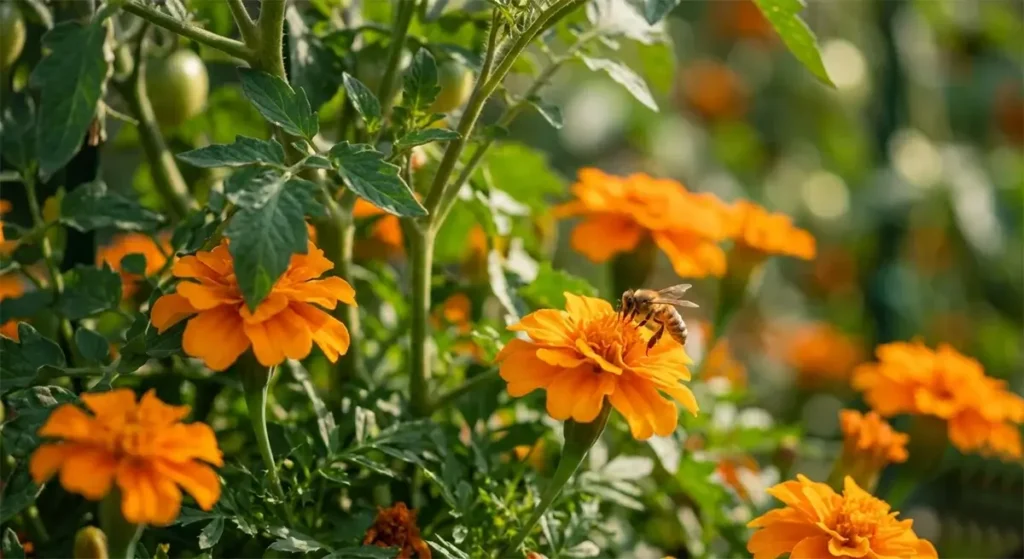
French marigolds (Tagetes patula) deserve special mention as possibly the single most useful companion plant in the vegetable garden. Research confirms that French marigolds planted densely suppress root-knot nematodes in the surrounding soil — a benefit that persists into the following season after the marigolds decompose. They also deter whitefly and aphids through volatile chemical emissions. According to the University of Minnesota Extension, French marigold root secretions can deter nematodes for up to three years when planted densely in a full growing season. Plant French marigolds as dense borders around your entire vegetable garden, between tomatoes and peppers, and in any beds with a history of nematode problems.
Cover Crops as Soil Companions
Think of cover crops as seasonal companions for your soil. Crimson clover fixes 80 to 100 pounds of nitrogen per acre when tilled under at peak bloom. Buckwheat blooms in 6 weeks, attracts syrphid flies (major aphid predators) in enormous numbers, and suppresses weeds aggressively. Winter rye breaks compaction and suppresses early-season weed germination. Interplanting these fast-growing covers in gaps and pathways keeps the soil biology active even in parts of the garden not currently in production.
Start With These Three High-Impact Combinations
The most common beginner mistake with companion planting is trying to memorize every rule before planting anything. Instead, start with these three well-documented combinations: plant French marigold borders around every vegetable bed; interplant basil between every other tomato plant in your tomato rows; and use nasturtiums as a living border around your cucumber and squash beds. These three practices alone will measurably reduce pest pressure, attract beneficial insects, and improve productivity compared to monoculture rows with no companions.
Final Thoughts
Companion planting rewards observation, experimentation, and patience. Start with the well-documented partnerships — marigolds and tomatoes, basil and peppers, the Three Sisters, carrots and onions — and keep notes on what you observe in your specific garden. Every garden is different, and the best companion planting knowledge you will ever have is what you learn from your own ground season after season.


Leave a Reply