
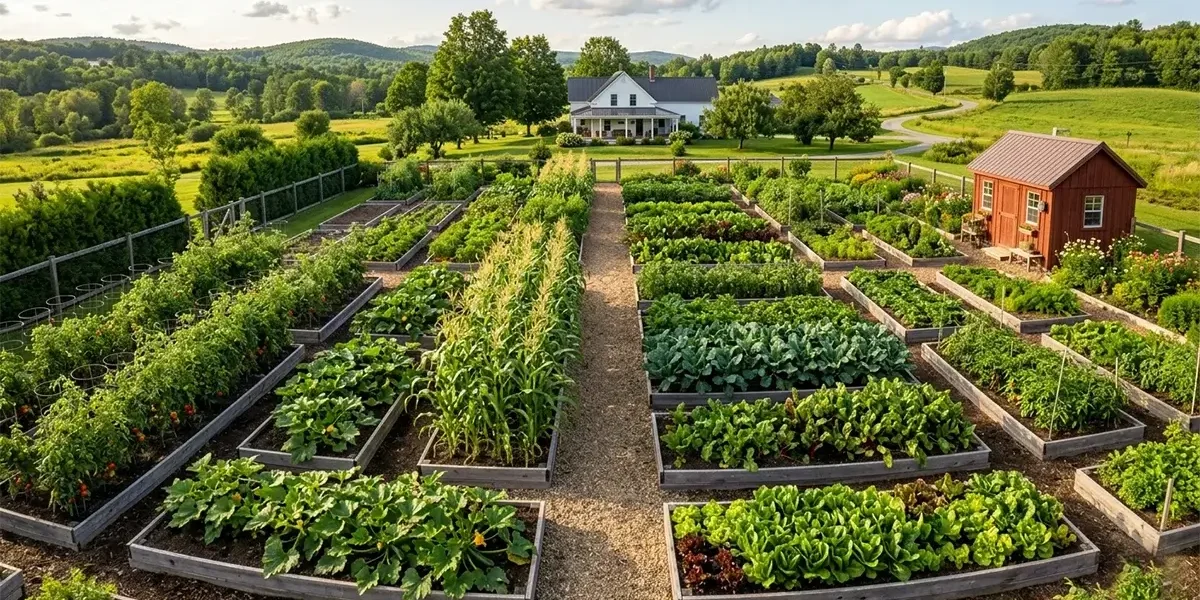
Planning a one-acre vegetable garden is a serious undertaking — and one of the most rewarding things a homesteader can do. A well-planned acre can produce the majority of a family’s annual vegetable supply, generate farmers market income, or both. But success at this scale does not happen by accident. It requires thoughtful planning before a single seed goes in the ground. This guide walks you through everything you need to build a productive, manageable one-acre vegetable garden from the ground up.
What Can You Actually Grow on One Acre?
One acre is 43,560 square feet — significantly more space than most beginning gardeners realize. With intensive, well-managed planting, a single productive acre can realistically produce enough tomatoes, peppers, cucumbers, and squash for a family of four plus significant surplus for canning; 50 to 100 pounds of dried beans; a full season’s supply of salad greens, kale, and chard; 300 to 500 pounds of winter squash for storage; and a large plot of sweet corn. But productivity depends entirely on soil quality, water availability, your climate, and how intensively you manage the space. A one-acre garden with poor soil and no irrigation will underperform a 2,500 square foot raised bed garden with rich soil and drip irrigation every time.
Step 1: Assess Your Site
Walk your intended garden space at different times of day and note the following critical factors:
Sunlight
Most fruiting vegetables — tomatoes, peppers, squash, beans, corn — require full sun, meaning at least 6 to 8 hours of direct sunlight per day. Leafy greens and root vegetables tolerate partial shade. Map where shadows fall at 8am, noon, and 4pm in the growing season.
Soil
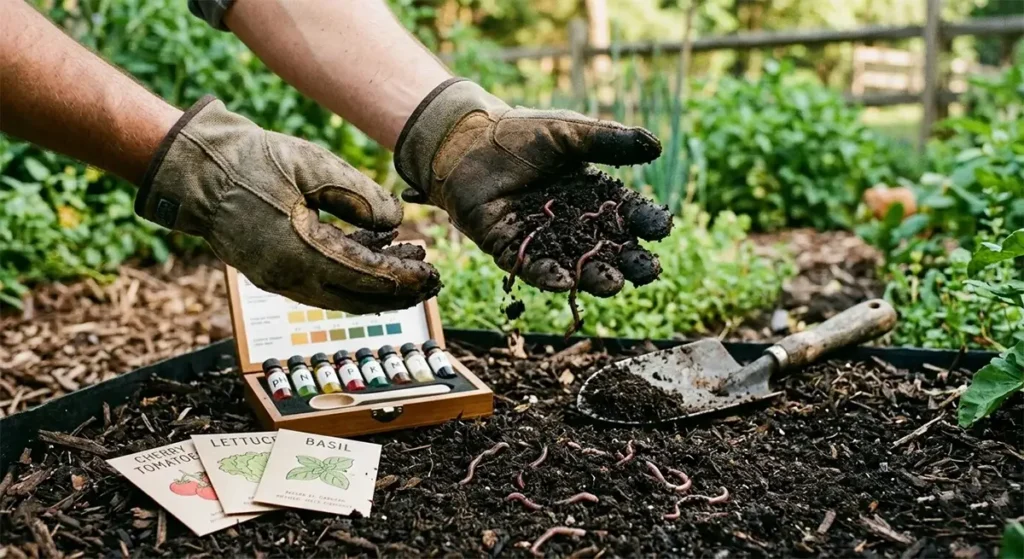
Dig several test holes across the plot, 12 inches deep. Note the color, texture, and depth of topsoil before you hit subsoil or hardpan. Send a soil sample to your state’s cooperative extension lab — a full soil test with nutrient analysis costs $15 to $30 and tells you exactly what amendments your garden needs. According to the USDA Natural Resources Conservation Service, healthy garden soil should contain at least 3 to 5% organic matter for optimal vegetable production — most undisturbed agricultural soils in America fall well below this level.
Water Access
A one-acre garden in summer can require 25,000 to 40,000 gallons of irrigation water per week in dry conditions. Identify your water source — well, municipal, pond, or rainwater — and calculate whether it can supply that volume. Plan your irrigation infrastructure before planting, not after your first drought.
Drainage
Walk the site after a hard rain. Areas that hold standing water for more than 24 hours have poor drainage that will drown root systems. Either avoid these areas, install drainage tile, or build raised beds to elevate the root zone.
Step 2: Choose Your Garden Layout
Do not plant all one acre in vegetables from day one. Most experienced market gardeners recommend starting with a quarter acre in intensive production and expanding as your skills, infrastructure, and soil improve. A practical layout for a one-acre plot divides the space as follows:
Zone 1 — Intensive Vegetable Beds (1/4 acre): Your high-investment, high-return zone. Use 4-foot-wide permanent beds with defined pathways. These beds receive all your compost and fertility investment. This is where your tomatoes, peppers, salad greens, herbs, and other high-value crops live.
Zone 2 — Main Crop Area (1/3 acre): Row-cropped vegetables that take more space but less management — sweet corn, dried beans, winter squash, potatoes, and pumpkins.
Zone 3 — Soil Building / Cover Crop Rotation (remaining acreage): A critical mistake beginners make is planting every square foot available in vegetables from year one. Rotate cover crops through unused portions to build organic matter, suppress weeds, and fix nitrogen.
Step 3: Plan Your Crop Rotation
Growing the same crop family in the same location year after year depletes specific soil nutrients and allows soil-borne diseases and pest populations to build up. The four major plant families to rotate are: Solanaceae (tomatoes, peppers, eggplant, potatoes), Cucurbitaceae (squash, cucumbers, melons), Brassicaceae (cabbage, kale, broccoli, cauliflower), and Leguminosae (beans, peas — which fix nitrogen and should precede heavy nitrogen feeders). A simple four-year rotation: Legumes → Brassicas → Solanaceae/Cucurbits → Root Vegetables → back to Legumes. Never plant a crop family in the same bed within a four-year cycle.
Step 4: Build Your Soil Before You Plant
No amount of good seed, good weather, or good technique compensates for poor soil. If you are starting with average farm or lawn soil, your first season’s primary goal should be soil building, not maximum production.
Deep Tillage or Broadforking: Break up compaction to 12 to 18 inches. A chisel plow or broadfork breaks up hardpan that roots cannot penetrate, dramatically improving drainage and root depth.
Compost Application: Apply 3 to 4 inches of finished compost across all planting areas and work it into the top 8 inches. On a quarter acre of intensive beds, this means roughly 4 to 5 cubic yards of compost.
Cover Cropping: After fall harvest, seed cover crops on all vacant beds immediately. Winter rye and hairy vetch is an excellent fall-planted combination — the rye suppresses weeds and adds organic matter, while the vetch fixes 80 to 120 pounds of nitrogen per acre that feeds next season’s crops.
Step 5: Water Infrastructure
Hand-watering one acre is not realistic. Plan your irrigation before your first planting. Drip irrigation delivers water directly to the root zone, reduces foliar disease by keeping leaves dry, and uses 30 to 50% less water than overhead sprinklers. A basic drip system for a quarter-acre of raised beds can be assembled for $200 to $400 in materials and will pay for itself in the first season in water savings and improved yields.
Step 6: Build a Planting Calendar
Work backward from your average first frost date in fall and your last frost date in spring. These two dates define your growing season and determine when every crop goes in the ground. Your local cooperative extension service publishes frost dates for your county — use these, not online averages, as microclimates within a few miles can vary by two to three weeks. Plan succession planting: plant fast-maturing crops like lettuce, radishes, and beans every two to three weeks for continuous harvests rather than all at once.
High-Value Crops to Prioritize
If you are growing for household food security, prioritize crops that store well: dried beans and corn for dry storage, winter squash for the root cellar, tomatoes for canning, and root vegetables for cold storage. If you are growing for farmers market income, prioritize high-dollar-per-square-foot crops: salad greens, cherry tomatoes, herbs, and specialty vegetables that grocery stores do not stock well.
Final Thoughts
A one-acre vegetable garden planned well is one of the most powerful food security assets a homesteading family can have. The planning phase — site assessment, layout design, soil testing, irrigation planning, and crop rotation — takes more time than the planting itself. But every hour of planning before you put seed in the ground pays back in multiples throughout the growing season. Start smaller than you think you need to, build your soil aggressively, and expand as your skills and infrastructure allow.

Leave a Reply