
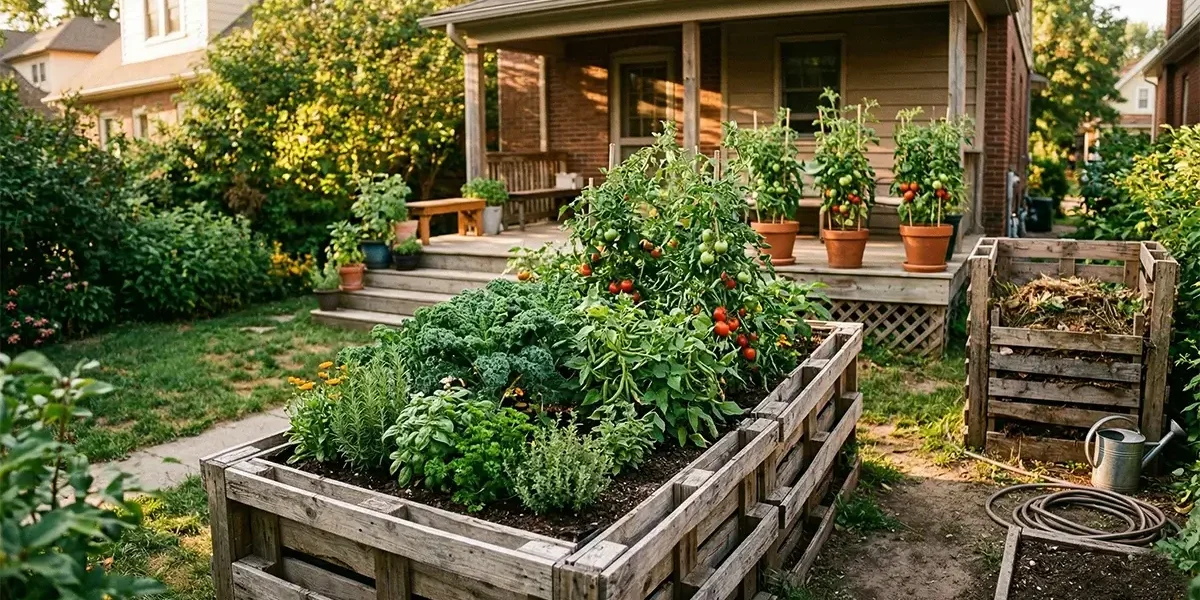
One of the biggest myths about homesteading is that you need land, capital, and a rural address to start. The truth is that the most valuable homesteading assets — skills, habits, and knowledge — can be built anywhere, on any budget, starting today. This guide is for people who want to move toward a more self-sufficient life but are working with limited financial resources and perhaps limited space. The skills you build now, before you have land, will make you a dramatically more effective homesteader when you do.
Redefine What Homesteading Means
Traditional homesteading images — the farmhouse, the barn, the wide pasture — can make the lifestyle feel inaccessible. But homesteading is fundamentally a practice, not a location. It is the practice of producing more of what you consume and consuming more intentionally. Every skill you develop and every step toward self-sufficiency counts, regardless of your current circumstances. An apartment renter who learns to ferment vegetables, bakes their own bread, and grows herbs on a windowsill is practicing homesteading. A suburban homeowner who raises six chickens, keeps a kitchen garden, and cans their tomatoes in the fall is homesteading. The location and the scale evolve over time. The mindset is where it all starts.
Start Building Skills Right Now
Skills are the most portable and most durable asset in homesteading. Unlike land and equipment, they cannot be repossessed, cannot depreciate, and increase in value with every application.
Food Preservation
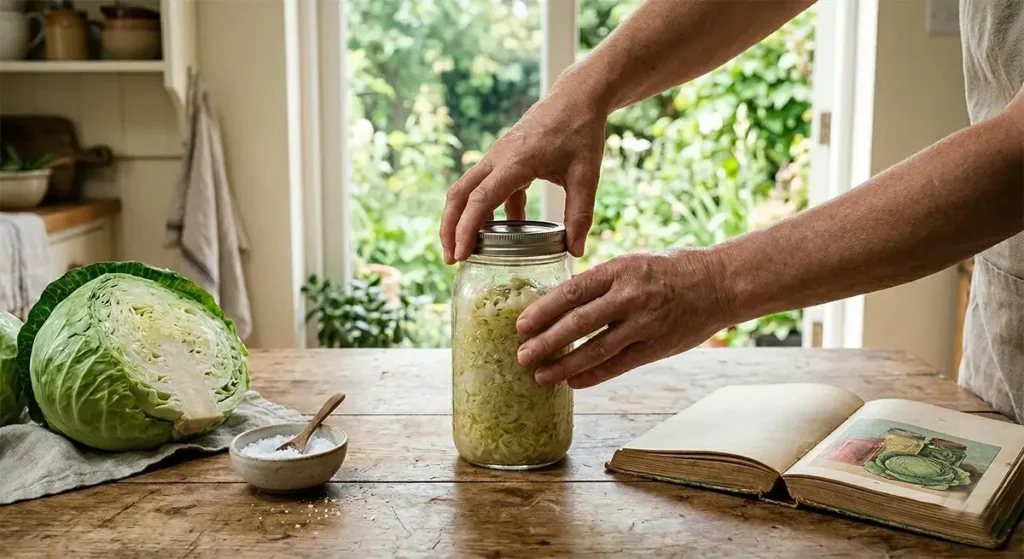
Learn to can, ferment, dehydrate, and freeze food. Start with a water bath canner and a case of mason jars — total investment under $60. These skills are immediately applicable in any home. A $30 investment in canning equipment and $20 in seasonal tomatoes can produce 15 to 20 jars of crushed tomatoes that would cost $60 at the grocery store. Learn to ferment vegetables: a quart of homemade sauerkraut costs pennies from a head of cabbage, requires no special equipment, and lasts months in the refrigerator.
Bread Baking
Making your own bread teaches fermentation, patience, and the relationship between ingredients and environment. A basic sourdough starter requires only flour and water — free to maintain once established. Baking your own bread saves $5 to $10 per week for a family of four and produces a far superior product to most commercial bread.
Seed Starting and Container Gardening
You do not need a garden bed to learn to grow food. Start seeds in yogurt containers under fluorescent lights. Grow tomatoes in 5-gallon buckets on a porch or balcony. Grow herbs in a sunny window. The point is not maximum yield — it is building understanding of plant growth, soil, water, and light that will make you a much more capable gardener when you do have ground to work with.
Basic Sewing and Mending
The ability to repair clothing, mend gear, and sew basic items is a practical homesteading skill that saves real money and reduces dependence on consumer goods. A secondhand sewing machine costs $30 to $80 at a thrift store and pays for itself quickly.
Home Cooking From Scratch
Every skill of scratch cooking — making stock from bones, rendering lard, making butter, cooking dried beans, baking, making condiments from basic ingredients — is a homesteading skill. These skills reduce food costs dramatically while improving nutrition and quality.
Build Your Knowledge Base for Free
Your Local Library
The public library is one of the most underused resources in America. Most libraries carry extensive collections of homesteading, farming, and self-sufficiency books. The Storey’s Country Wisdom series, the Mother Earth News archive, and dozens of comprehensive references are available at no cost. Request interlibrary loans for titles your branch does not carry.
Cooperative Extension Service
Every state in the United States has a cooperative extension service connected to a land-grant university. Extension agents provide free, research-based guidance on gardening, food preservation, livestock, soil, and rural living. Many counties offer free workshops, demonstration gardens, and master gardener programs. Find your local extension office through the USDA National Institute of Food and Agriculture land-grant university directory — this is one of the most valuable free resources available to any aspiring homesteader.
WWOOF and Farm Apprenticeships
World Wide Opportunities on Organic Farms (WWOOF) connects volunteers with organic farms in exchange for room, board, and hands-on learning. Spending a summer WWOOFing on a working homestead will teach you more in three months than three years of reading. Many small farms also take seasonal apprentices with housing provided.
Save Money With a Purpose
The transition to homesteading requires capital — even a small rural property requires a down payment, and startup costs for animals, fencing, equipment, and infrastructure add up quickly. If your goal is to own land, treat saving as a primary homesteading activity right now.
Reduce Your Monthly Fixed Costs: Every dollar reduction in monthly expenses is a dollar that can accumulate toward land. Cooking from scratch instead of eating out can save $500 to $1,000 per month for a family. Growing even a modest amount of your own vegetables reduces grocery bills meaningfully.
Research Rural Real Estate: Rural land is dramatically cheaper than suburban land in most of the United States. Five to ten acres of raw or lightly improved land in Appalachia, the Ozarks, the upper Midwest, and many parts of the South can be purchased for $30,000 to $80,000 — an achievable target for many households willing to save aggressively for several years. Research USDA Farm Service Agency beginning farmer loan programs and USDA Rural Development loan guarantees, which offer favorable terms for first-time rural land purchasers.
Start Homesteading Where You Are
If you rent an apartment: Grow herbs on windowsills and balconies in containers; ferment vegetables, make kombucha and kefir; learn to bake and preserve food; take every free extension course or workshop available.
If you rent a house with a yard: Ask permission to build raised garden beds — most landlords say yes; start composting kitchen scraps in a tumbler composter that moves with you; check local ordinances about backyard chickens — many cities allow a small flock.
If you own a suburban home: Convert grass to productive garden beds; start a backyard chicken flock if ordinances permit; install a rain barrel for garden irrigation ($30 to $60 at most hardware stores); plant fruit trees — they take years to produce but are a long-term investment in future food production; build a worm bin for vermicomposting kitchen scraps into premium garden fertilizer.
Community Resources That Cost Nothing
- Community gardens: Many towns maintain free or low-cost community garden plots — a legitimate place to learn vegetable gardening before you have land.
- Seed libraries: Hundreds of public libraries now operate seed libraries where you can borrow vegetable, herb, and flower seeds at no cost.
- Tool libraries and makerspaces: Borrow canning equipment, garden tools, and power tools instead of purchasing them.
- Local homesteading groups: Search Facebook and Meetup for local homesteading, permaculture, or backyard farming groups — these communities are generous with knowledge, seeds, cuttings, and equipment loans.
The Most Important Investment You Can Make Right Now
If you can only do one thing to move toward homesteading today, learn to grow food. Start the smallest possible garden — six pots of tomatoes on a porch, three raised beds in a backyard, one row of beans in a community plot — and commit to it for a full season. The lessons you learn from one full season of growing food — starting seeds, managing pests, dealing with drought, harvesting at the right time — are irreplaceable. They cannot be learned from books alone. Get your hands in the soil this year, wherever you are.
Final Thoughts
The homesteading journey is exactly that — a journey. Very few people arrive at a fully functioning self-sufficient homestead in one leap. Most spend years building skills, saving money, growing their knowledge base, and making incremental moves toward the life they want. The homesteaders who thrive are not the ones who waited until they had the perfect property and the perfect budget. They are the ones who started practicing, learning, and building right where they were — and kept going.

Leave a Reply