
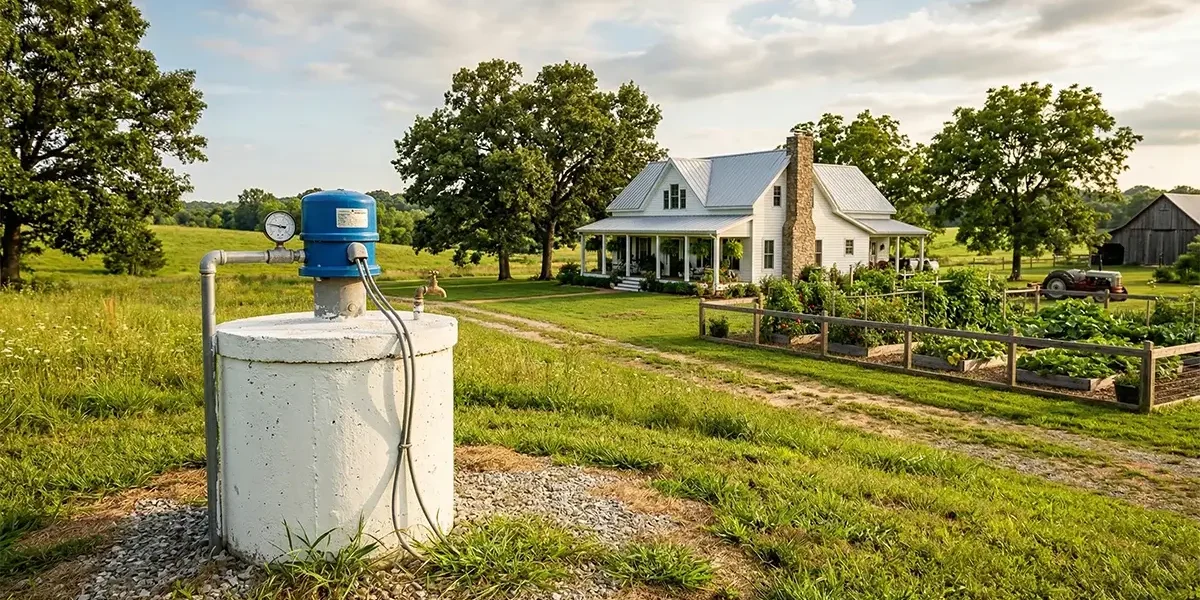
For most Americans buying a rural property for the first time, the question of water supply is one of the most unfamiliar and consequential decisions they face. In suburban and urban homes, water just comes out of the tap. On a rural homestead, your relationship with water is fundamentally different — you are likely responsible for your own supply, your own quality, and your own system maintenance. This guide covers everything first-time rural landowners need to know about private well water and how it compares to municipal water service.
The Core Difference: Ownership and Responsibility
When you purchase a home served by a municipal water system, the utility is responsible for treating, testing, and delivering water that meets the standards of the Safe Drinking Water Act. When you own a private well, you own the entire water system — the well, the pump, the pressure tank, the pipes — and you are responsible for its maintenance, testing, and the quality of water it delivers. This is not a reason to avoid well water. Hundreds of millions of Americans drink private well water every day. It is simply a reality that requires understanding and active management.
How a Private Well Works
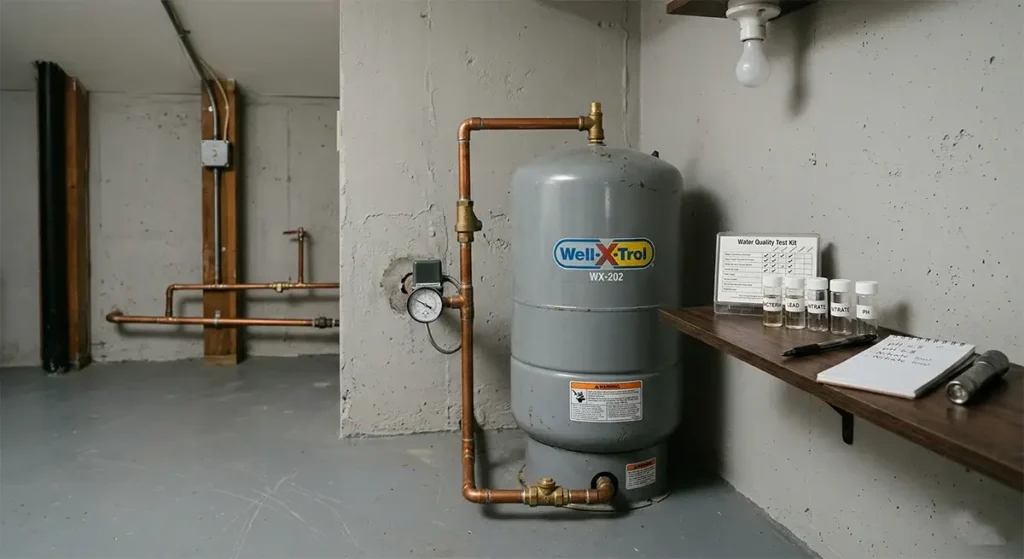
A drilled well consists of a steel or PVC casing sunk to a water-bearing formation (aquifer) in the earth. A submersible pump at the bottom pushes water up through a pipe to a pressure tank in your home or pump house. The pressure tank maintains water pressure in your plumbing system and reduces the frequency with which the pump must cycle on and off, extending pump life. A pressure switch monitors tank pressure and signals the pump to activate when pressure drops below a set point (typically 40 psi) and shut off when it reaches a higher set point (typically 60 psi).
Older rural properties may have dug wells — large-diameter, shallow excavations typically 20 to 50 feet deep that draw water from shallow groundwater significantly more susceptible to contamination from surface runoff, agricultural chemicals, and drought. Modern drilled wells are 100 to 400+ feet deep and draw from deeper, more protected aquifer formations.
Well Water Testing: The Non-Negotiable First Step
The most important thing you can do when purchasing a property with a private well is get a comprehensive water test. The appearance, taste, and smell of well water tell you almost nothing about its safety. Some of the most dangerous contaminants — arsenic, nitrates, radon, bacteria — are completely undetectable by taste, smell, or sight.
At minimum, test for: coliform bacteria and E. coli (any positive result requires immediate action); nitrates (dangerous to infants above 10 mg/L, common in agricultural areas from fertilizer and septic systems); arsenic (naturally occurring in rock formations in many regions, no safe drinking water level established); lead (from older plumbing); pH and hardness (affects taste and plumbing longevity); and iron, manganese, and sulfur (aesthetic contaminants affecting taste and staining fixtures). The EPA’s Private Drinking Water Wells resource page provides state-specific guidance on common contaminants and certified testing laboratories in your area. Test for coliform bacteria annually at minimum, and a full panel every 3 to 5 years.
Common Well Water Problems and Solutions
Hard water (elevated calcium and magnesium) is not a health hazard but causes scale buildup on appliances and reduces water heater life. A conventional salt-based water softener is the most common solution; salt-free descaling systems are an alternative for those who prefer to avoid added sodium.
Iron above 0.3 mg/L stains sinks and laundry orange and imparts a metallic taste. Treatment options include iron-specific filters, water softeners, and oxidizing filters. Test before treating to understand which form of iron is present — ferrous (clear water) iron and ferric (red water) iron require different treatment approaches.
Sulfur (rotten egg smell) is produced by sulfur bacteria. Shock chlorination — disinfecting the well with bleach — often resolves bacterial sulfur odor. Persistent problems may require an oxidizing filter or aeration system.
Bacterial contamination requires shock chlorination as a first step. If contamination recurs, the well casing may be compromised or surface water may be intruding. Consult a licensed well driller or hydrogeologist.
Well Pump and System Maintenance
A quality submersible pump lasts 10 to 20 years with proper maintenance. Warning signs of pump issues include: pressure fluctuations or pulsing water pressure; rapid on/off cycling (short-cycling, usually a waterlogged pressure tank); air spitting from faucets; sudden complete loss of water pressure; or unusual grinding sounds from the pressure tank area. Short-cycling caused by a waterlogged pressure tank is the most common issue — replacing the pressure tank ($150 to $300 in parts) is a manageable DIY project for experienced homeowners and will dramatically extend pump life.
Well Water vs. Municipal Water: The Honest Comparison
Cost: Municipal water typically costs $50 to $150 per month for a household of four. Private well water costs nothing after installation — electricity to run the pump is typically $10 to $30 per month. Well installation costs $5,000 to $15,000 depending on depth and geology but is typically borne by the property seller in a real estate transaction. Over 20 years, private well water is almost always less expensive than municipal service.
Quality control: Municipal water is regulated by the EPA under the Safe Drinking Water Act and must meet published maximum contaminant levels. Private well water quality is entirely your responsibility — which can mean superior quality if actively managed, or inferior quality if neglected.
Reliability: Municipal water fails during main breaks and infrastructure failures. Well water fails during power outages (your electric pump has no power) and equipment failure. For homesteaders serious about water security, a generator, a hand pump as a backup, or a gravity-fed storage tank provides resilience against both scenarios.
Water for the Homestead: Special Considerations
A homestead has significantly higher water demands than a conventional suburban household. Vegetable gardens, livestock watering, washing produce, and canning operations all add up quickly. Before purchasing rural property, ask the seller for the well’s production rate in gallons per minute and confirm it is adequate for both domestic use and agricultural demand. A well that produces 3 to 5 GPM is generally adequate for a household; livestock and large garden irrigation may require 5 to 10+ GPM. A well that cannot meet peak summer demand is a serious limitation on homestead productivity.
Final Thoughts
Private well water is the norm rather than the exception for rural homesteading properties across the United States — and for good reason. It is reliably less expensive than municipal water over time, independent of utility infrastructure, and can be of excellent quality when properly tested and maintained. The key is going in with clear eyes: test your water thoroughly, understand your system, establish a testing and maintenance routine, and have a backup water plan. A well-maintained private water system is not a liability — it is one of the most valuable and practical features of a rural homestead.



Leave a Reply